
1997년 인도네시아 발리 출생
b. 1997 Bali, Indonesia
제마나 무르티는 문화유산과 디지털 기술의 교차점을 탐구하는 발리 출신의 작가이다. 그는 발리의 도상(iconography)에서 출발하여 머신러닝, 3D 모델링, 디지털 제작 기법을 활용함으로써 문화적 형식이 어떻게 새롭게 해석되고 재구성될 수 있는지를 탐구한다.
제마나는 2020년 싱가포르 난양예술대학교(Nanyang Academy of Fine Arts)를 졸업했으며, 2023년 UOB 올해의 회화상(UOB Painting of the Year)에서 브론즈상을 수상했다. 그의 작품은 개인 및 공공 컬렉션에 소장되어 있으며, 인도네시아 텐트렘 호텔(Tentrem Hotel), 자카르타의 루이 비통 플래그십 스토어, 모건 스탠리(Morgan Stanley) 등에 설치되어 있다.
현재 인도네시아 발리를 기반으로 거주하며 작업하고 있다.
Jemana Murti’s sculptural practice explores the intersection of cultural heritage and digital technologies. Drawing from Balinese iconography, he employs machine learning, 3D modelling, and digital fabrication to examine how cultural forms can be reinterpreted and reimagined.
Jemana graduated from the Nanyang Academy of Fine Arts, Singapore, in 2020 and received the Bronze Award at the UOB Painting of the Year competition in 2023. His works are held in both private and public collections, with notable placements at the Tentrem Hotel, the Louis Vuitton flagship store in Jakarta, and Morgan Stanley Singapore.
Jemana currently lives and works in Bali, Indonesia.
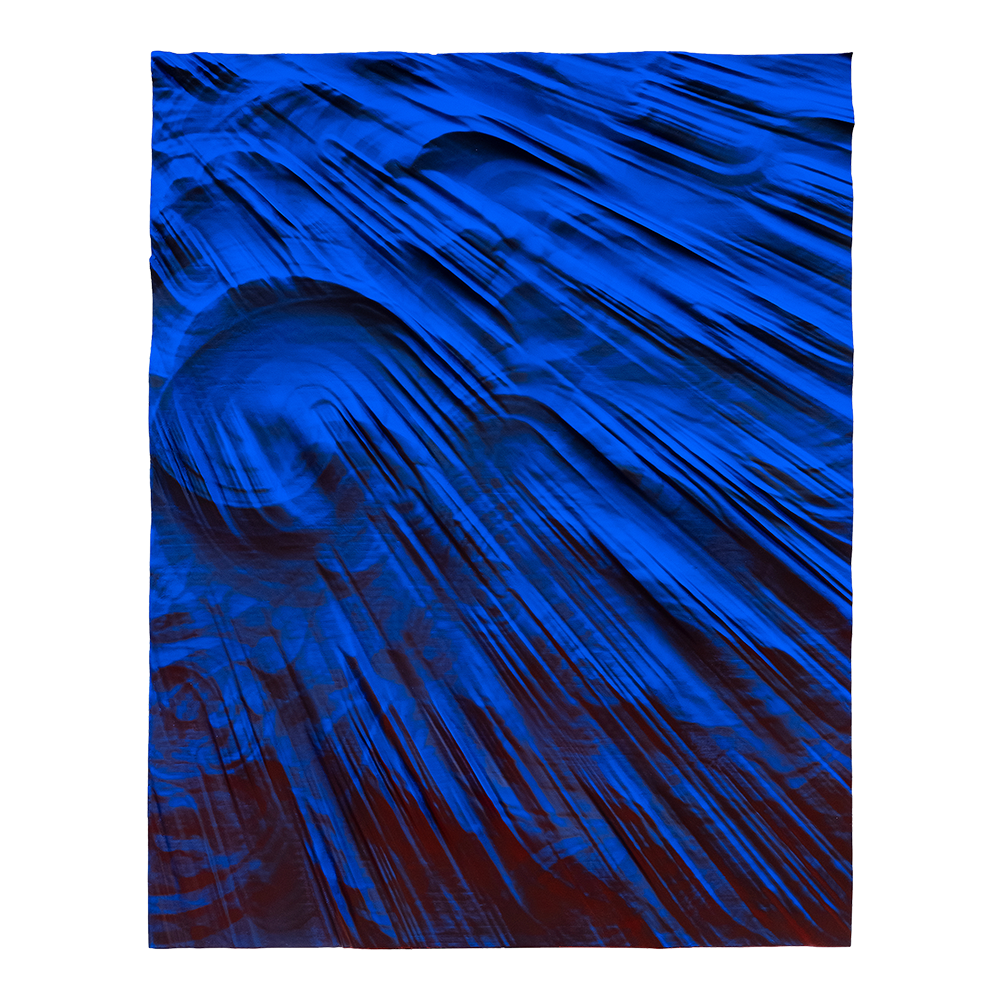
Shadows
2026
3D Printed ABS and Acrylic
180 x 140 cm
(Shadows) 에서 제마나는 발리 건축을 대표하는 상징적 요소 가운데 하나인 사원 문을 재해석한다. 사원 문은 세속과 신성을 잇는 문턱으로 여겨지며, 의례적·심리적·우주론적 차원이 교차하는 장소이자 물리적 형태를 넘어서는 상징적 의미를 지닌 경계로 기능한다.
제마나는 전통적으로 신과 왕족만이 통과할 수 있었던 중앙의 문을 지상의 맥락에서 분리하여, 영원한 황혼이 지속되는 공간에 부유시킨다. 작가는 이를 ‘영원한 오후 6시(eternal 6 pm)’—빛이 사라지며 형태의 윤곽이 서서히 흐려지는 발리의 과도기적 시간—로 설정한다. 이 시간 속에서 문은 존재와 부재 사이를 오가며, 작가 특유의 합성 블루로 구현된 형상은 끝내 선명한 모습으로 고정되지 않은 채 동시에 나타나고 사라진다.
In Shadows, Jemana reimagines one of Bali’s most symbolically charged architectural forms: the temple gate, a threshold believed to mediate between the earthly and the divine. More than a physical entrance, the gate functions as a ritual, psychological, and cosmological passage, carrying meanings that extend beyond its material form.
Jemana isolates the central gate-traditionally reserved for deities or royalty-and removes it from its earthly setting, suspending it within a perpetual twilight. Set at an “eternal 6 pm,” the liminal hour in Bali when fading light dissolves the boundaries of form, the gate oscillates between presence and absence. Rendered in his signature synthetic blue, it appears to materialise even as it recedes, never fully resolving into clarity.
Draft of Utopia
2025
3D printed PETG and Acrylic on PVC and Aluminium
100 x 120 cm
Vestige
2024
3D printed PETG and Acrylic on PVC and Aluminium
100 x 150 cm
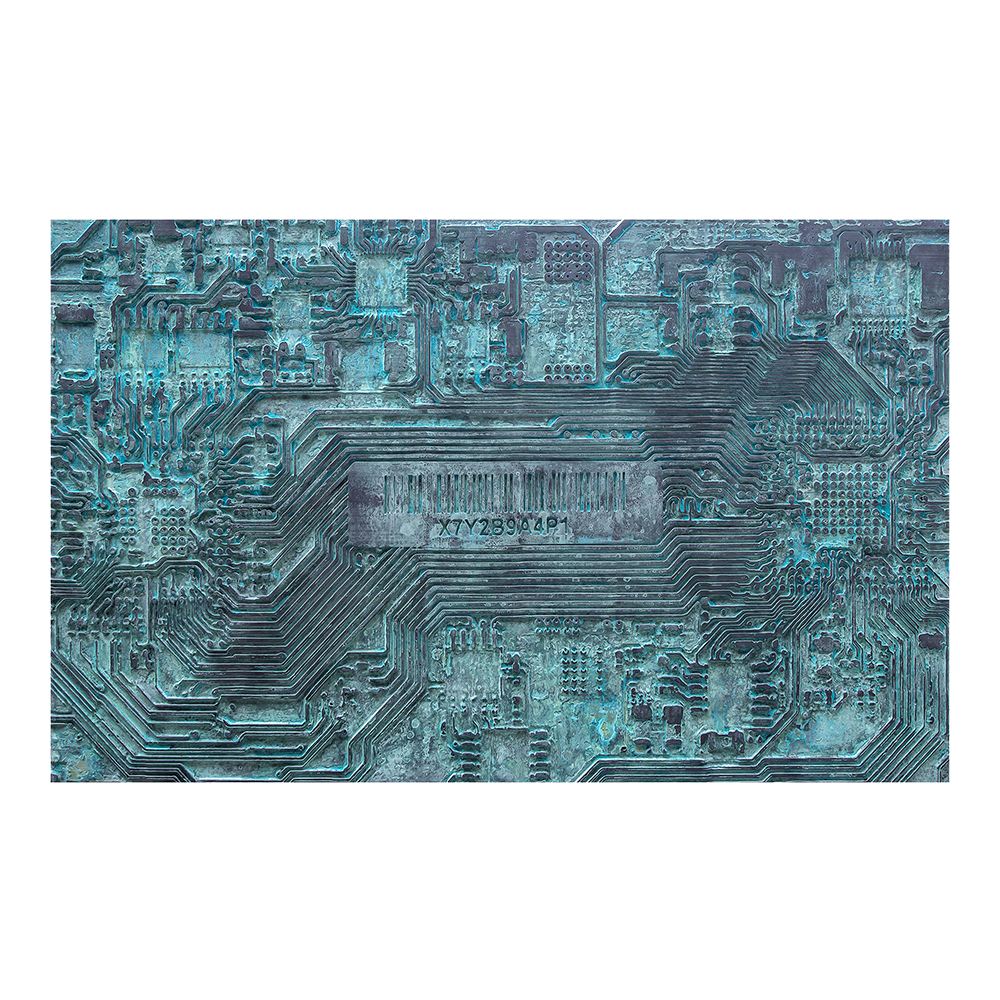
X7Y2B9A4P1_ARTIFICIAL_DIVINITY
2026
Bronze Particles on 3D Print ABS
150 x 240cm
인공지능은 흔히 ‘전지전능한(all-knowing)’, ‘편재하는(omnipresent)’ 존재와 같이 본래 영적 영역에 속했던 표현들로 설명되곤 한다. 제마나는 이러한 중첩에 주목하며, 컴퓨터 칩을 숭배의 대상으로 제시하고 인공지능 자체를 활용해 ‘인공의 신’이라는 개념을 탐구한다. X7Y2B9A4P1은 AI의 도움을 받아 제작되었으며, 작품의 제목 역시 AI가 컴퓨터 칩의 명명 방식을 모방하는 과정에서 생성한 무의미한 문자와 숫자의 조합에서 비롯되었다. 이처럼 작품은 스스로 이름을 부여받는 존재가 되며, 인간이 끊임없이 세계를 정의하고 의미를 부여해 온 행위를 되돌아보게 한다.
마더보드 또한 본래의 기능을 거부한다. 화면을 구성하는 요소들은 실제 전자 부품이 아니라 인위적으로 만들어진 형태들로, 함께 모여 작가가 ‘신의 자화상(self-portrait of a god)’이라 부르는 이미지를 이룬다. 화면의 중심에는 하나의 칩이 자리하고 있으며, 그로부터 방사형으로 뻗어 나가는 회로는 여러 개의 팔을 지닌 티베트 불교의 신상(神像)을 연상시킨다. 표면에 더해진 브론즈 입자는 은은한 금속성 광택을 부여하며, 작품이 성상(聖像)과 기술적 인공물 사이를 넘나드는 긴장감을 더욱 강화한다.
Artificial intelligence is often described in terms once reserved for the spiritual realm, such as “all-knowing” and “omnipresent”. Jemana draws on this overlap by presenting computer chips as objects of worship, using AI itself to explore the idea of an artificial deity. X7Y2B9A4P1 was created with the assistance of AI, and its title comes from the nonsensical strings of letters and numbers the system generates when attempting to imitate the names of computer chips. In this way, the work effectively names itself, reflecting on humanity’s enduring impulse to define and assign meaning.
The motherboards likewise reject their intended function. Their components are not real electronic parts but invented forms that, together, become what Jemana describes as a self-portrait of a god. At the centre of each composition is a single chip whose radiating wires recall Tibetan depictions of deities with multiple arms. Bronze particles lend the surface an almost devotional luminosity, allowing the work to oscillate between sacred icon and technological artefact.