
1966년 인도네시아 발리 출생, 2006년 별세
b. 1966, d. 2006, Bali, Indonesia
무르니는 강렬하고도 지극히 개인적인 작품을 통해 무의식과 꿈, 그리고 내면의 심리를 탐구한 인도네시아의 대표적인 작가이다. 대부분 독학으로 작업 세계를 구축한 그는 1990년대 여성의 성적 경험과 욕망을 전면에 드러낸 작품들로 주목받으며, 기존 재현의 규범에 도전하는 작가로 부상했다.
초기에는 그의 작업이 ‘저속하다’ 혹은 ‘부도덕하다’는 평가를 받기도 했으나, 이후 그 안에 담긴 깊이와 복합성이 재조명되었다. 그의 사후 작품은 국제적으로 폭넓게 소개되고 있으며, 노팅엄 컨템포러리(Nottingham Contemporary)에서 열린 대규모 회고전을 비롯해 상파울루 비엔날레(São Paulo Biennale), 카네기 미술관(Carnegie Museum of Art), 호주 국립미술관(National Gallery of Australia), 싱가포르 국립미술관(National Gallery Singapore) 등에서 전시되었다.
Murni was a prolific and uncompromising Indonesian artist whose vivid, intensely personal works explored the subconscious, dreams, and the inner psyche. Largely self-taught, she rose to prominence in the 1990s for her striking depictions of female sexuality, which challenged prevailing norms of representation.
Initially dismissed as “dirty” or “immoral”, Murni’s practice has since been re-evaluated for its depth and complexity. Since her passing, her work has been widely exhibited internationally, including a major solo retrospective at Nottingham Contemporary, as well as presentations at the Sao Paulo Biennale, Carnegie Museum of Art, National Gallery of Australia and National Gallery of Singapore.
Keduanya Make Me Gila
(Both of Them Make Me Crazy)
2003
Acrylic on Canvas
149.5 x 100 cm, Framed: 155 x 105 x 5 cm
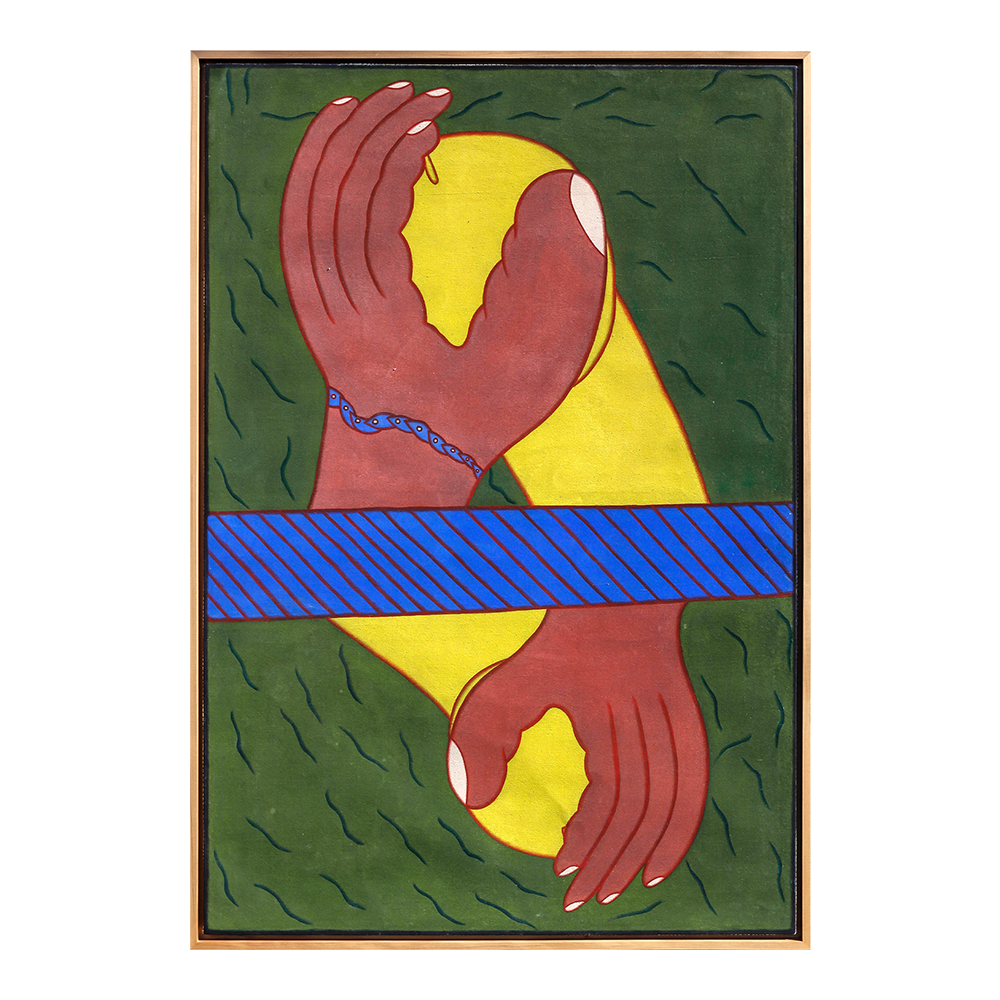
무르니의 회화에서는 여성의 주체성과 욕망이 전면으로 부상하며, 쾌락은 어떠한 변명도 없이 대담하게 주장된다. Keduanya Make Me Gila (둘 다 나를 미치게 한다)에서 엄지는 과장된 유희적 형태로 부풀어 오르며, 점점 위축되는 노란 색의 남근 형상과 맞닿는다. 이 장면은 익숙한 위계 구조를 전복시키며, 권력의 방향을 뒤집는다. 주도권은 여성의 형상으로 이동하고, 여성은 감각과 쾌락을 적극적으로 흡수하며, 한때 지배적이었던 형상은 뒤로 물러난다.
얽힌 손과 남근적 형상의 중심 구조는 점차 요니(yonic)적 실루엣으로 수렴되며, 작품은 발리 우주론에 기반한 해석의 지평을 연다. 생성과 균형의 신성한 상징인 링가와 요니는 이곳에서 변형되고 장난스럽게 점유된 형태로 등장한다. 무르니는 이러한 우주론적 틀을 개인적인 조형 언어로 전환하며, 에로티시즘을 영적 에너지의 원천으로, 쾌락을 재생과 갱신의 장으로 사유한다.
Female agency and desire surge to the foreground in these paintings, where pleasure is claimed boldly and without apology. In Keduanya Make Me Gila (Both of Them Make Me Crazy), a thumb swells with playful exaggeration as it meets a shrinking yellow phallus, flipping familiar hierarchies on their head. The exchange is irreverent and gleefully subversive: power flows toward the female subject, who absorbs agency and delight while the once-dominant form recedes.
The central tangle of hands and phallic forms settles into a yonic silhouette, opening the work to readings rooted in Balinese cosmology. Lingga and yoni, sacred symbols of generative balance, surface here in transformed, mischievous guise. Murni channels this cosmological framework into a deeply personal language in which the erotic becomes spiritual sustenance and pleasure becomes a site of renewal.
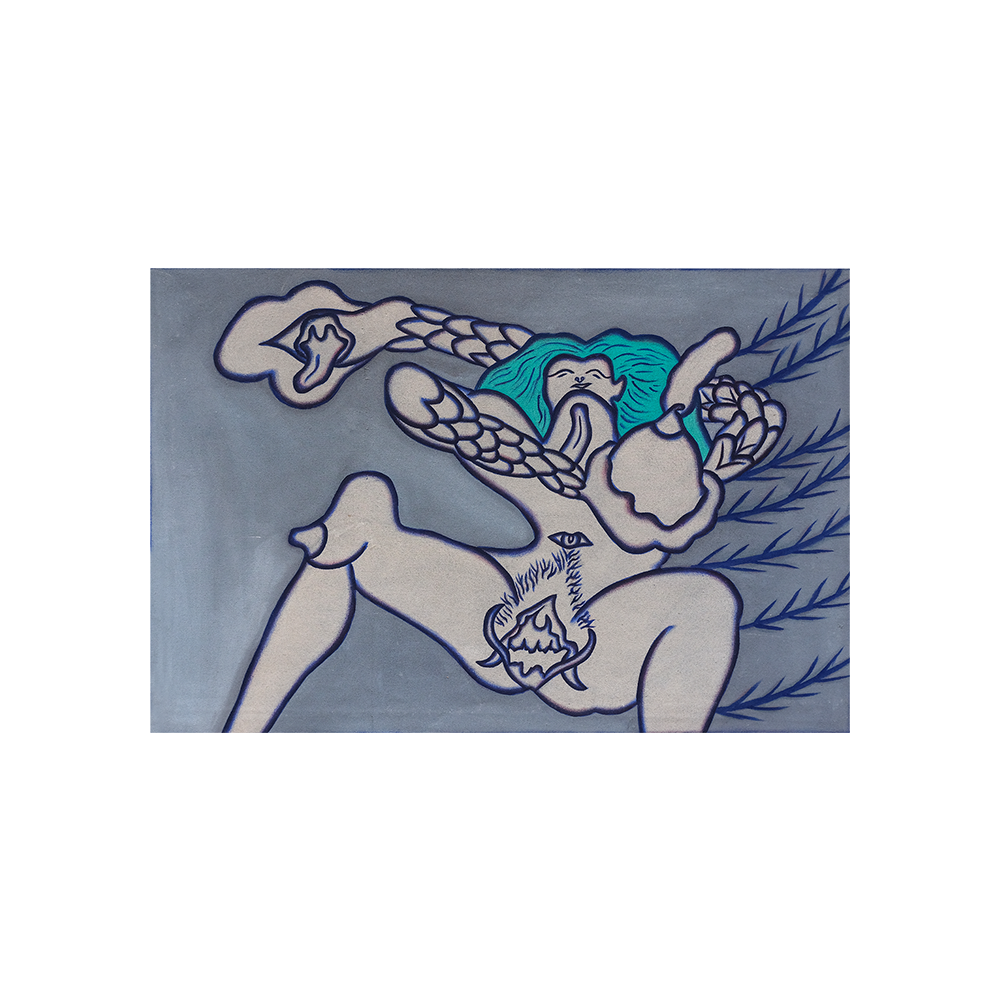
마찬가지로 Lagi Panas (발정)에서 욕망은 숨겨지거나 억제되지 않는다. 캔버스 위에 길게 누운 여성 인물은 완전한 자기 결정성을 지닌 채 화면을 점유하며, 신체는 꿈결 같은 변형의 연속 속에서 전개된다. 팔다리, 머리카락, 신체의 구조는 끊임없이 변화하는 상징적 형상으로 뒤섞이며, 물리적 신체와 상상의 영역 사이의 경계를 해체한다. 무르니는 성적 재현을 수동적이거나 관찰되는 대상으로 제시하는 대신, 여성의 욕망을 능동적이고 생성적인 힘의 중심에 위치시킨다. 에로티시즘과 영성은 분리되지 않으며, 신체는 단순한 재현의 대상이 아니라 쾌락과 변형이 발생하는 장소로 재구성된다. 무르니의 급진적인 유희성은 여성의 욕망을 외부의 시선이나 규범에 의해 규정되지 않는, 전적으로 스스로 정의되는 기쁨의 힘으로 확인한다.
Similarly, in Lagi Panas (In Heat), desire is neither hidden nor restrained. Reclining across the canvas, the female figure occupies the picture plane with complete self-possession, her body unfolding through a dreamlike sequence of transformations. Limbs, hair, and anatomy blur into shifting symbolic forms, dissolving the boundary between the physical body and the realm of imagination. Rather than presenting sexuality as something passive or observed, Murni centres female desire as an active and generative force. The erotic and the spiritual become inseparable. The body is not simply represented but reimagined as a site of pleasure and transformation. Through her radical playfulness, Murni affirms female desire as a force that is joyful and wholly self-defined.
Lagi Panas
(In Heat)
2002
Acrylic on Canvas
40 x 60 cm, Framed: 44.5 x 64 cm
Hati Damai
(Peaceful Heart)
1996
Acrylic on Canvas
50 x 50 cm
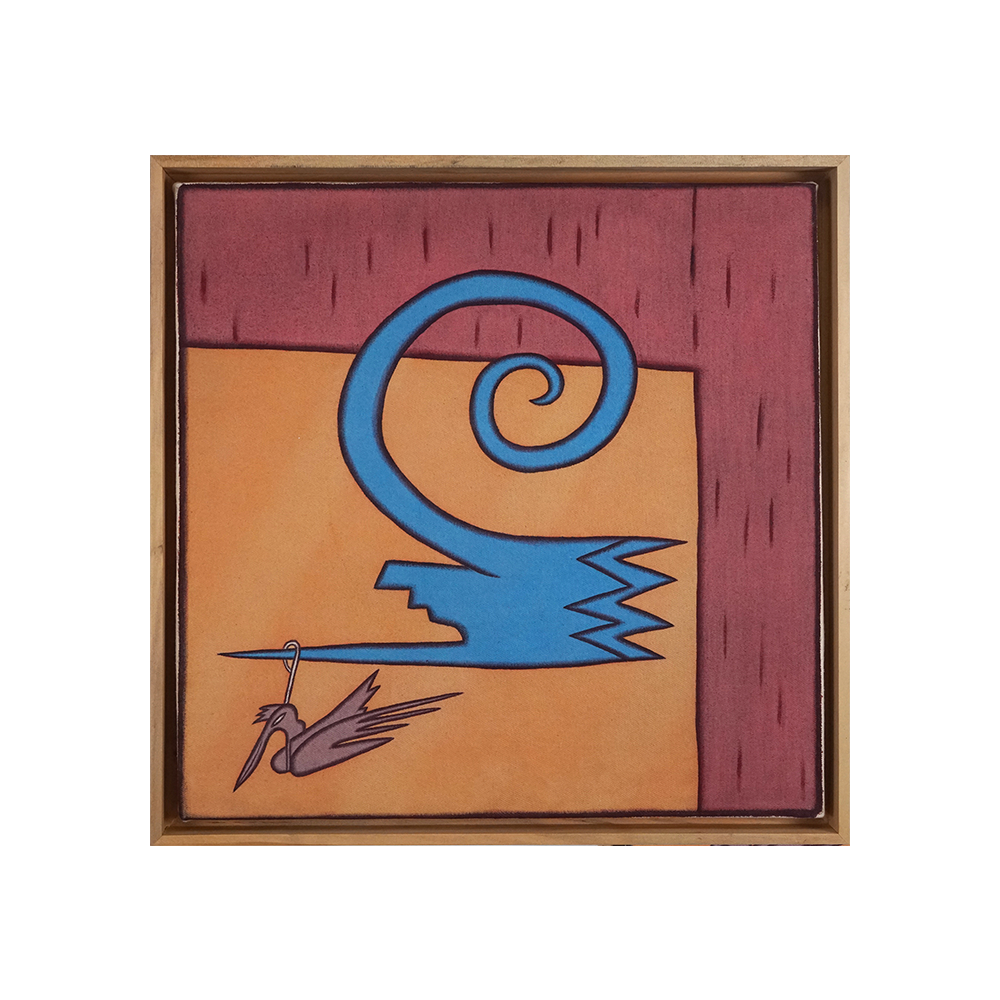
새와 그 밖의 비행하는 생명체는 무르니의 작품에서 반복적으로 등장하는 모티프이다. Hati Damai (평온한 마음)에서 작은 새 한 마리가 선명한 푸른색 나선형 형태에 매달려 있으며, 짙은 붉은색과 오렌지색의 배경을 이룬다. 새의 정제된 선과 평면화된 양식은 익숙한 형태를 환상적이고 때로는 수수께끼 같은 이미지로 변환하는 무르니의 조형적 접근을 보여준다.
생생하고 몽환적인 화면 속에 매달린 새는 독자적인 존재감을 드러낸다. 무르니의 초기 경력기에 제작된 Hati Damai는 자신만의 독특한 시각 언어를 구축해 나가던 작가의 자기 확언으로 읽을 수 있으며, 이는 이후 그의 작업을 규정하는 고유한 언어로 자리 잡게 된다.
Birds and other creatures of flight commonly appear as motifs in Murni’s works. In Hati Damai (Peaceful Heart), a small bird hangs from a bright blue spiral form, set against a deep red and orange background. Its clean lines and flattened, stylised form reflect Murni’s approach to figuration, where familiar forms are transformed into fantastical and often enigmatic images.
Suspended against a vivid, dreamlike field, the bird takes on a presence of its own. Painted early in Murni’s career, Hati Damai can be understood as an affirmation of the singular visual language she was beginning to claim—one that would become unmistakably her own.
Disaat Ke Lombok
(When departing to Lombok)
2001
Acrylic on Canvas
15 x 20 cm